

Ross Township · Pittsburgh's North Hills · Peptide Therapy
Peptide Therapy. In Pittsburgh's North Hills.
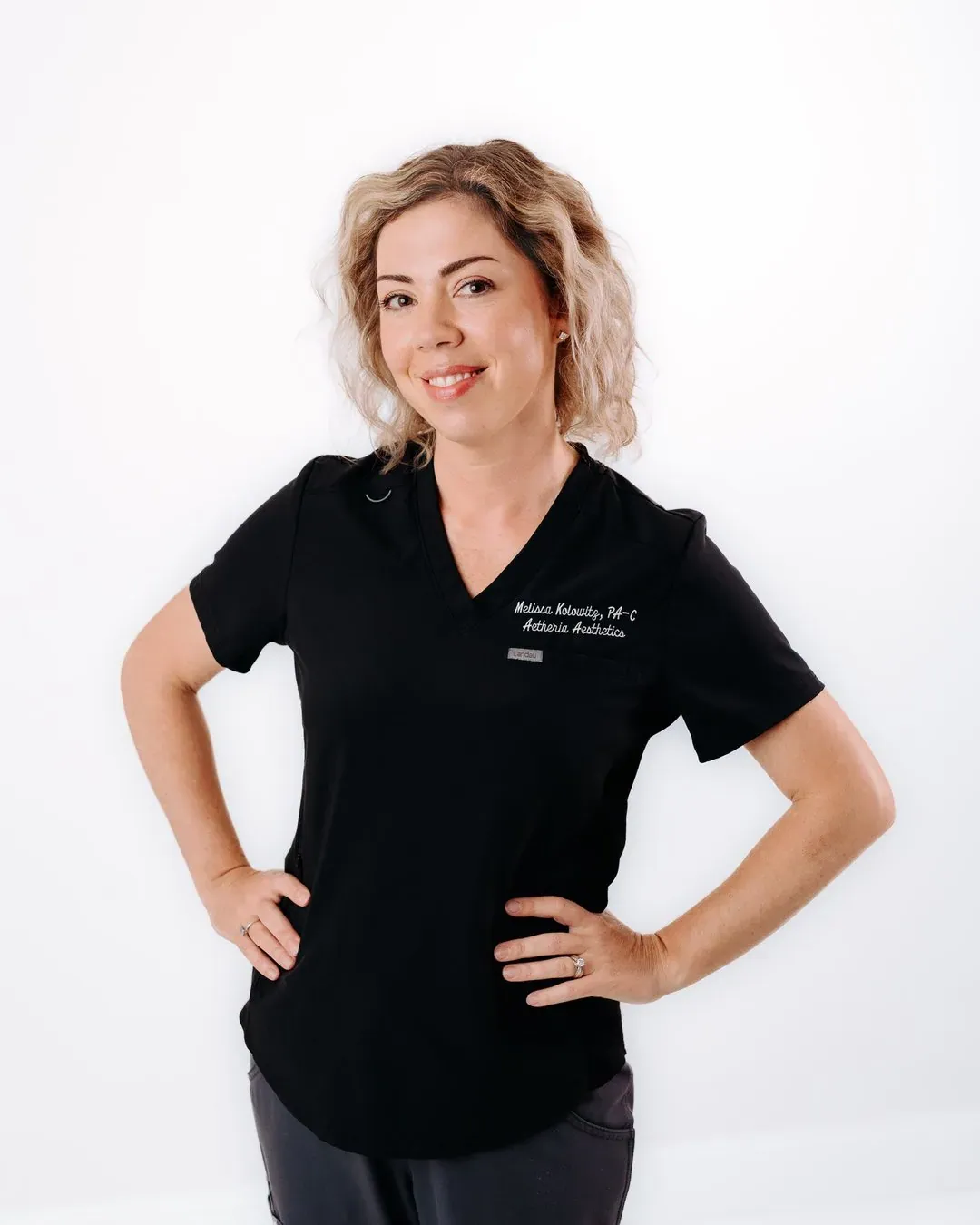
NAD+, sermorelin, ipamorelin, tesamorelin, and GHK-Cu, chosen from your labs and your history for what you're working on: recovery, sleep, body composition, energy. In person, with Melissa Kolowitz, PA-C.
Our Approach to Peptide Therapy
Your labs come first.
The peptide recommendation follows.
Peptides are short chains of amino acids your body already uses as signals, for recovery, sleep, body composition, and energy. Each one Melissa works with nudges one of those signals, so the real question is which signal needs help, and whether yours does. Your labs and your history answer that, in person, with Melissa Kolowitz, PA-C.
Clinical Summary
Peptide therapy uses short chains of amino acids that signal specific biological pathways (recovery, sleep quality, body composition, cellular energy) under clinical supervision. Five common peptides at Aetheria include NAD+, sermorelin, ipamorelin, tesamorelin, and GHK-Cu, each selected from your lab work and clinical history. The program is provider-led: Melissa Kolowitz, PA-C, reviews baseline labs, matches the peptide to what your biology points to, and monitors response at follow-up. Peptides are prescription medications, and they work alongside sleep, nutrition, and training rather than in place of them. Most courses run in cycles of several weeks with periodic reassessment at the Pittsburgh North Hills studio. Selection and dosing are clinical decisions made at consultation. Individual results vary.

Five common peptides, five different jobs.
Peptides are short chains of amino acids your body already makes and uses as messengers. The ones used clinically fall into a few well-studied families: growth hormone secretagogues like sermorelin and ipamorelin, which work with the body's own growth hormone rhythm for recovery, sleep, and body composition. Tesamorelin, a related analog with a specific role in visceral fat. GHK-Cu, a copper-binding peptide involved in tissue repair and skin quality. NAD+, a cellular precursor for energy and metabolic health. Each signals something different, so Melissa Kolowitz, PA-C, chooses from your labs and your history, sets the dose and the cadence, and adjusts as your follow-up labs come back. She brings 20+ years of clinical and surgical experience to that decision, and she makes it with you, in person.
Start Your AssessmentThe Peptides We Offer at Aetheria
Each peptide signals something different.
| Attribute | NAD+ | Sermorelin | Ipamorelin | Tesamorelin | GHK-Cu |
|---|---|---|---|---|---|
| Family | Cellular precursor | Growth hormone secretagogue | Growth hormone secretagogue | Growth hormone-releasing hormone analog | Copper-binding tripeptide |
| Useful for | Cellular wellness, energy, and metabolic health support | Body composition support, sleep quality, and recovery | Body composition and recovery, with more selective signaling than sermorelin | Visceral fat considerations, an off-label use | Tissue support, skin quality considerations, healing support |
| Format | Subcutaneous injection | Subcutaneous injection | Subcutaneous injection | Subcutaneous injection | Subcutaneous injection or topical formulation |
| How often | Weekly to monthly, varies by plan | Daily, typically before bed | Daily, often paired or alternated with sermorelin | Daily | Varies by plan and goal |
Who Peptide Therapy Is Designed For
Where peptides tend to fit.
On a GLP-1, wanting body composition support
Designed for adults on semaglutide or tirzepatide who want body composition support during active weight loss. Sermorelin, ipamorelin, or tesamorelin, matched to what your labs and your tracking show.
Concerned about cellular and metabolic wellness
Designed for adults whose labs point toward NAD+ for cellular energy and metabolic markers.
Considering visceral fat
Designed for adults whose labs or imaging show visceral fat is part of the picture, where tesamorelin is one of the options Melissa reviews.
Considering recovery or sleep support
Designed for adults whose sleep, recovery, or body composition has shifted with age or training load, where sermorelin or ipamorelin may fit.
Considering tissue and skin support
Designed for adults thinking about skin quality, healing after a procedure, or general tissue support, where GHK-Cu may fit.
Wanting in-person care
Designed for adults who want a peptide plan built from their own labs, with the same provider at every follow-up.
If one of these sounds like you, the consultation is where it gets specific.
Metabolic Health
How peptide therapy fits in.
Peptide therapy at Aetheria sits inside the Metabolic Health program, as one part of a plan built around your labs and your goals.
Alongside GLP-1 weight loss
Many patients on semaglutide or tirzepatide add sermorelin or ipamorelin for body composition support during active loss. Tesamorelin comes into the conversation when labs suggest visceral fat is part of the picture. NAD+ supports cellular wellness throughout.
The peptide is paced with your GLP-1 cadence, so the two plans move together.
Before or without a GLP-1
Some patients start peptide therapy without ever starting a GLP-1. NAD+ is often the first conversation when labs point to cellular support.
Sermorelin or ipamorelin may fit adults whose focus is recovery or sleep rather than weight.
After significant weight loss
Long-term Metabolic Health often includes peptides matched to your follow-up labs.
Body composition, recovery, and cellular wellness keep mattering long after active weight loss has settled.
Alongside your aesthetic care
GHK-Cu is sometimes considered alongside Sculptra®, Morpheus8® Burst, or QuantumRF, where tissue support fits the picture.
The order is worked out with you in consultation, from your labs and what you're after.
Why Aetheria for Peptide Therapy
One provider, your own labs, paced doses.
One provider, every visit
Every peptide visit is with Melissa. Always Melissa. The history she builds at your first consultation carries into every dose decision after it.
Chosen from your labs
Baseline labs drive the first choice. Your stack is personalized to what your results and your history show, so every peptide on it is there for a reason, and Melissa adjusts it as your follow-up labs come back.
An honest yes or no
If your labs and history don't point to a peptide, you'll hear that, along with what might fit better. Some patients leave the first visit with a plan that has no peptide in it, and that's a good visit.
Conservative doses, paced adjustments
Starting doses are conservative and adjusted to how you respond, with your follow-up labs in hand.
Part of a whole plan
Peptides connect to your GLP-1 care, nutrition and supplement guidance, and your aesthetic care when significant weight loss raises new questions about your face or skin.
"Surgical training teaches you to think about tissue, healing, and the patient in front of you as a whole physiology, not a single complaint. That perspective informs every peptide selection, every dose decision, every follow-up."
Your Peptide Therapy Visit
What your first visits look like.
Consultation.
About 60 minutes on your metabolic and wellness history, current medications, sleep, body composition, energy, and what you want from this. Melissa talks through whether a peptide fits. No pressure to begin the same day.
Lab work and baseline.
Metabolic and hormonal panels, plus inflammatory or nutritional markers when they're relevant. The results shape which peptide, what dose, and in what order.
Starting, and learning the injection.
A conservative starting dose. For injectable peptides, Melissa shows you the technique herself before you take anything home.
Follow-up and adjustment.
Follow-up visits matched to your plan, repeat labs when they're useful, and dose and cadence adjusted to how you're responding.
What to Expect
How we track results.
Labs, sleep, recovery, energy.
Peptide results are mostly functional: how you sleep and recover, how your body composition and lab markers move over weeks and months, how your energy holds up. Those are the signals Melissa tracks with you, rather than a single before-and-after photo. At consultation she can walk through what's realistic for the peptide in question, given your baseline labs. Individual results vary, and outcomes depend on how consistently you take it, dosing, baseline labs, and your own physiology. FDA status differs by peptide. Tesamorelin is FDA-approved for lipodystrophy in a specific condition, and its label says it isn't for weight loss, so using it for visceral fat beyond that is off-label, which is common in prescribing. The regulatory picture for peptides is still evolving, and Melissa goes through the current status of each option with you at consultation.


Common Questions
Straight answers.
What patients ask before booking.
What peptides do you offer at Aetheria?
Five common peptides include NAD+ for cellular and metabolic wellness. Sermorelin and ipamorelin, both growth hormone secretagogues, for body composition, sleep, and recovery support. Tesamorelin for visceral fat, an off-label use. GHK-Cu, a copper tripeptide, for tissue and skin support. Melissa chooses from your labs and your history, and a plan can be a single peptide.
Do I need lab work before starting peptide therapy?
Yes. Baseline metabolic and hormonal panels tell Melissa which peptide fits, what starting dose is reasonable, and how often to follow up. The choice depends on what the labs show, so the labs come first. Some peptides also call for follow-up labs to track your response.
Can I take peptide therapy and a GLP-1 together?
Often, yes. Many patients on semaglutide or tirzepatide add sermorelin or ipamorelin for body composition support during active weight loss, and tesamorelin comes up when labs suggest visceral fat is part of the picture. NAD+ supports cellular wellness alongside GLP-1 therapy. The peptide is paced with your GLP-1 cadence and chosen from your labs.
Why don't you add NAD+ for every patient?
Every patient is different, and Melissa recommends based on your specific situation. NAD+ is a cellular precursor with wide-ranging roles, so your labs and history decide whether it belongs on your plan.
Are peptides FDA approved?
Some are. The GLP-1 medications semaglutide and tirzepatide are FDA-approved peptides, for example, and tesamorelin is FDA-approved for lipodystrophy in a specific condition. Using tesamorelin for visceral fat beyond that is off-label, a routine part of medicine. FDA status differs by peptide and is still evolving, so Melissa Kolowitz, PA-C, goes through the current status of each option with you at consultation, before anything is ordered.
How long do peptide pathways last?
It depends on the peptide, the reason for it, and how you respond. Some are short courses of a few months. Others continue as part of long-term Metabolic Health care, with periodic labs and dose adjustments. Continuing, tapering, or switching is decided with you in consultation, from your labs and your goals.
Where can I get peptide therapy in Pittsburgh?
At Aetheria Aesthetics & Wellness in Ross Township, in Pittsburgh's North Hills. Melissa Kolowitz, PA-C, plans every peptide course herself, starting with an in-person consultation and baseline labs, because the right peptide depends on what the labs show. Aetheria serves patients across the North Hills, Allegheny County, and surrounding areas, from our studio at Ross Park Mall. Many come from Ross Township, Wexford, Cranberry Township, Sewickley, and Mars.
Want the deep dive? Read about BPC-157 in Pittsburgh →
By consultation.
Book online or call to schedule your initial in-person consultation with Melissa Kolowitz, PA-C.